PlanetariumVR: Redefining Astronomy Education Through Immersive Virtual Reality
Role: Developer | Team: Oscar Rojas Gaete, Sebastián Jeria López, Benjamín Robles Arancibia, Esteban Carrasco
Overview
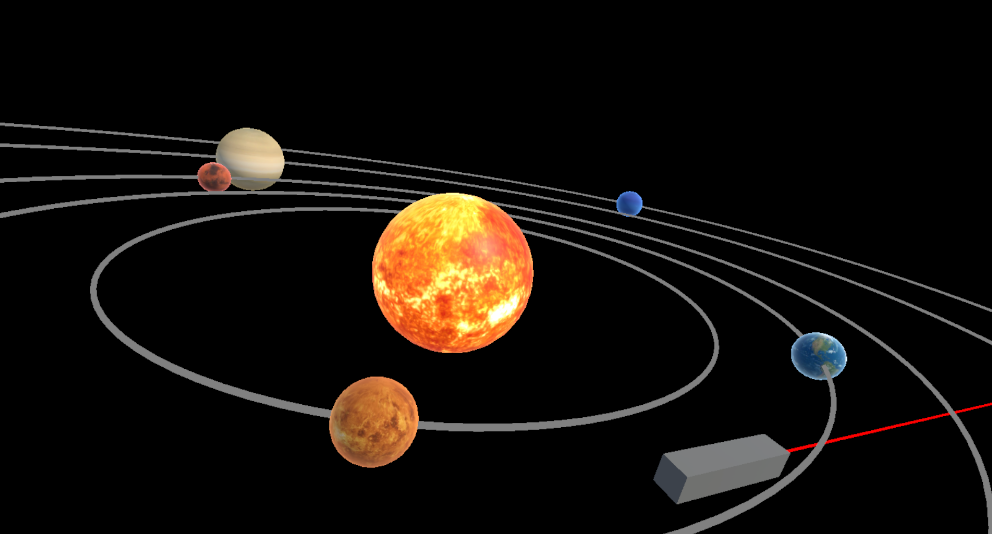
Traditional planetariums offer a passive viewing experience. PlanetariumVR was created to disrupt this model by transforming astronomy education into an active, immersive, and highly collaborative journey. Developed as a VR platform, the project allows users to step inside the cosmos, physically build their own solar system, and explore celestial bodies up close using an interactive cursor tracked by a modified Wii controller.
The core goal was simple but ambitious: leverage immersive technology to foster genuine curiosity and autonomous learning about the universe.
Features & Functionalities
1. Collaborative Solar System Construction
Instead of just observing, users actively build the solar system using a drag-and-drop mechanic. Once a planet is placed, it automatically begins orbiting the sun. By implementing multiplayer networking, groups of users can build and explore the cosmos together in real-time, adding a social layer to the learning experience.
2. Deep-Dive Celestial Interaction
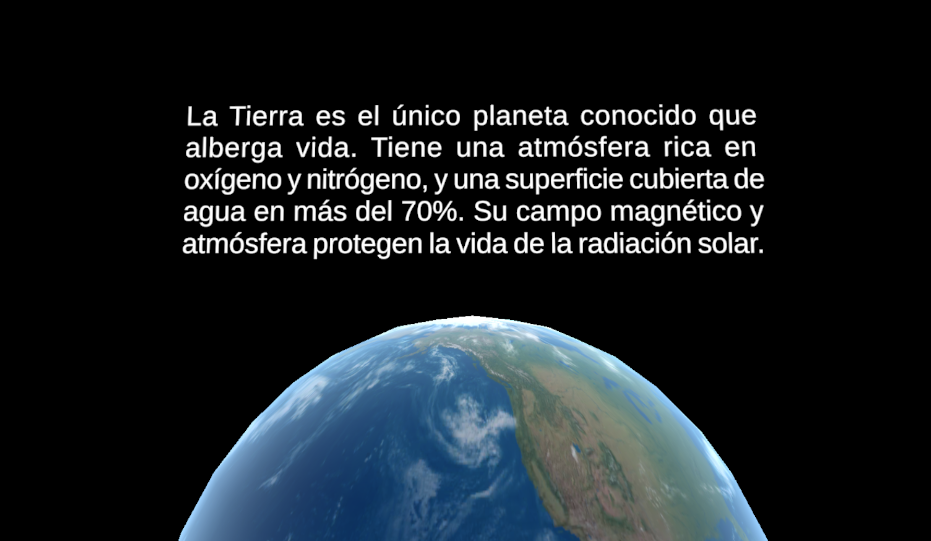
Users are surrounded by a ring of planets. By selecting a planet, they are presented with a detailed information panel containing technical data (mass, radius, gravity) and descriptive text, turning the environment into a dynamic, spatial encyclopedia.
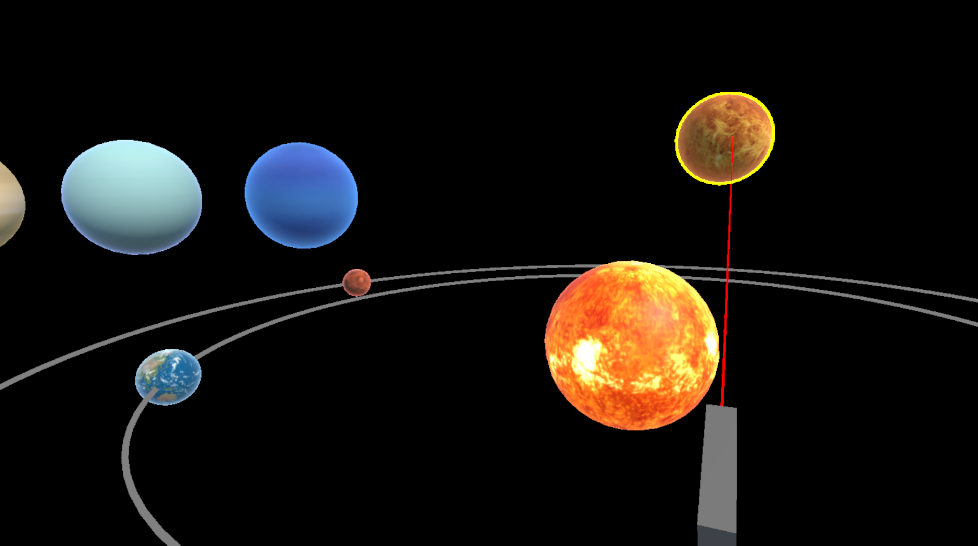
Interactive cursor for object manipulation.
3. Creative Hardware Integration (Wii Tracking)
To enhance immersion and move away from standard VR controllers, we integrated an external Wii remote as a 3D cursor. This provided a highly intuitive, laser-pointer-style interaction that felt natural to users, allowing them to point, click, and manipulate the space around them with ease.
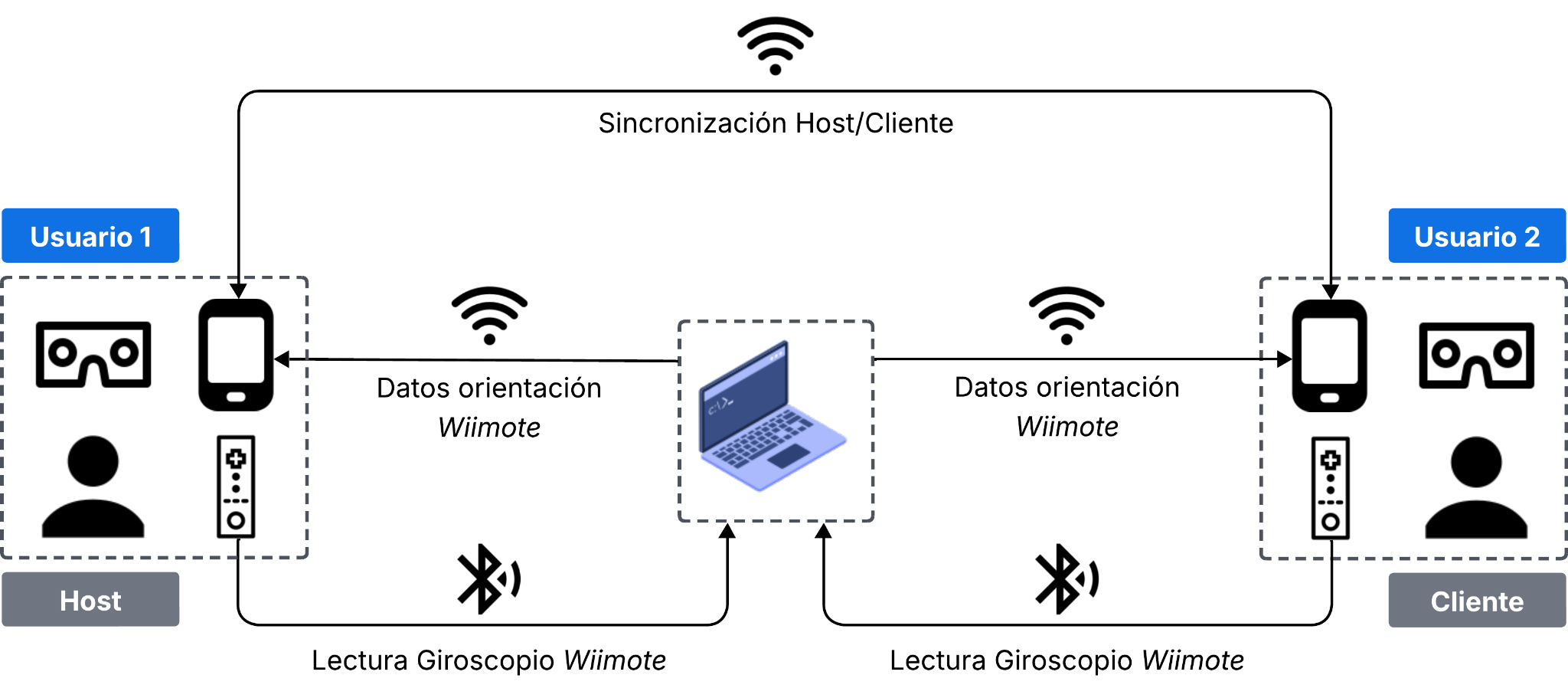
System architecture and hardware integration schema.
User Testing & Validation
To ensure the platform actually delivered on its educational and experiential promises, we conducted rigorous user testing with 40 participants over two days. Test groups consisted of 2-3 people from diverse academic backgrounds (Computer Science, Industrial Engineering, and Geography).
Perception Questionnaire Results (Likert 1-5)
The results validated the VR approach:
- Focused Immersion: +0.77 (3.62 → 4.39)
- Joy / Fun: +0.62 (3.96 → 4.58)
- Perceived Ease of Use: +0.60 (3.80 → 4.39)
- Perceived Control: +0.52 (3.85 → 4.37)
- Value / Utility: +0.40 (4.05 → 4.44)
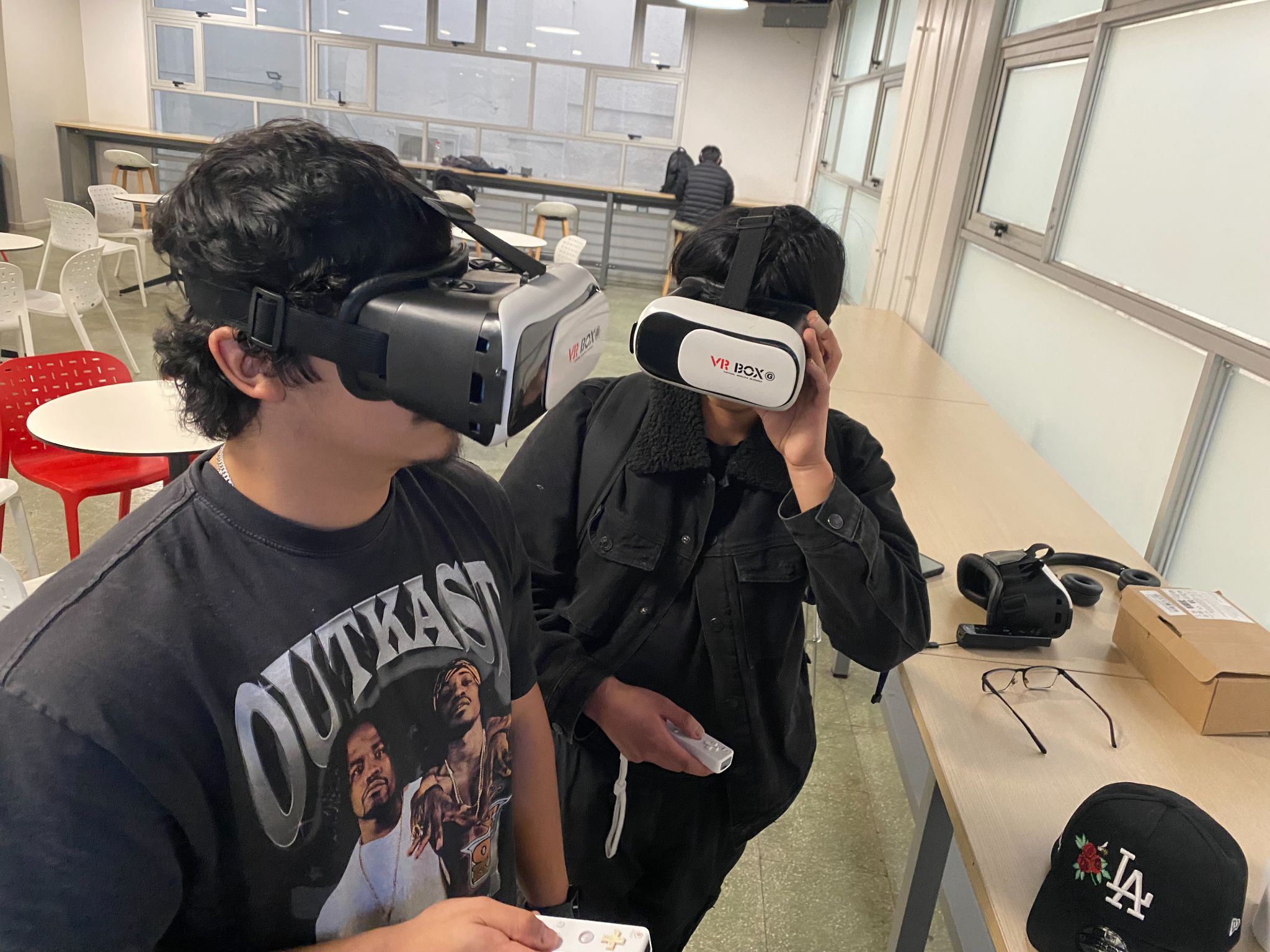
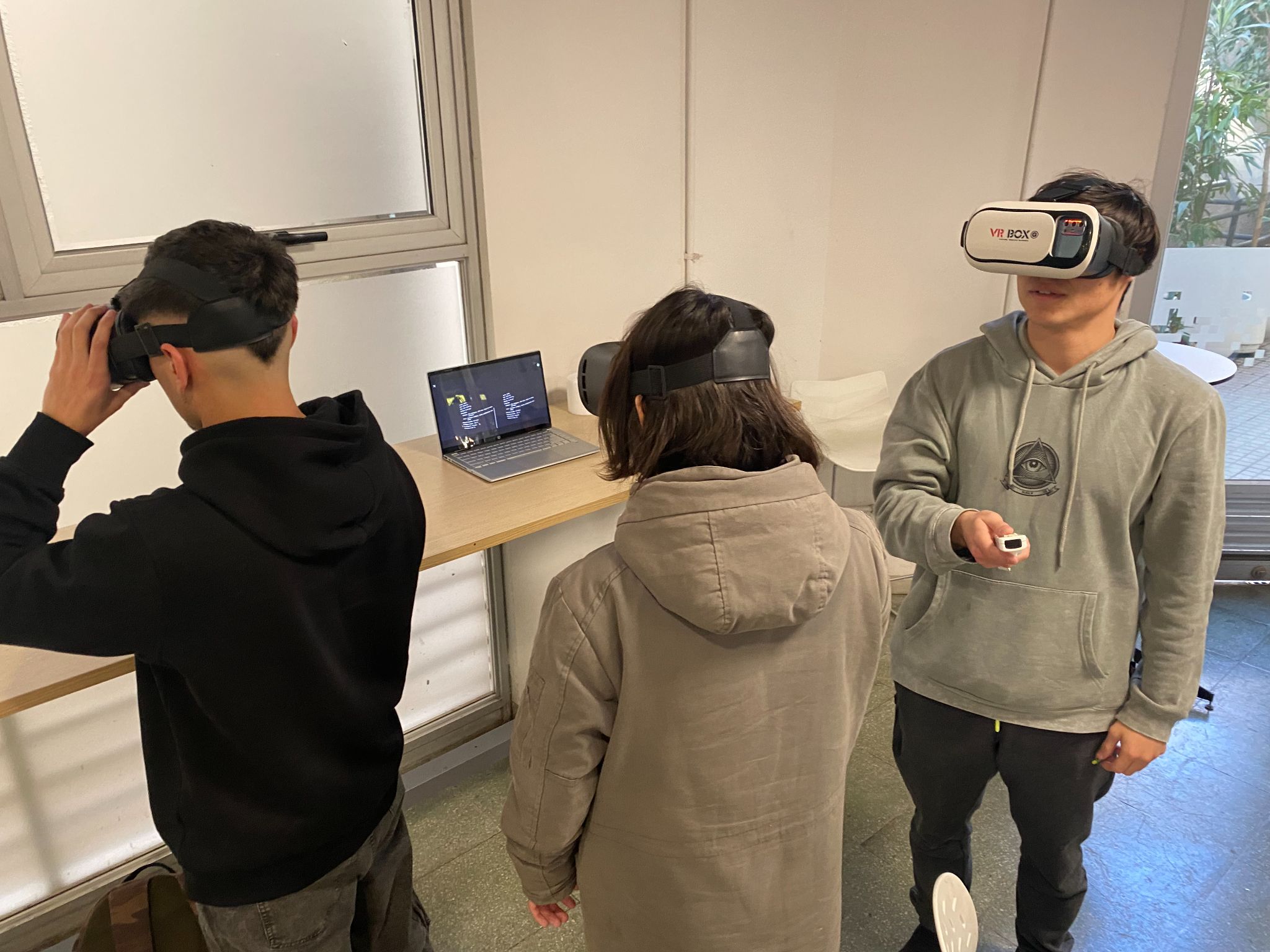
Qualitative Feedback: What the Users Said
The data told a positive story, but the user comments revealed exactly why the experience worked:
- "The Wii remote gives you the freedom to move around and see if objects are made to interact with; it's very intuitive."
- "It was fun to build the solar system together with my friends. Collaborating felt like playing the Wii with friends again."
- "It's highly immersive. Honestly, I expected less, but the atmosphere is great considering it's just planets."
Challenges & Lessons Learned
Building for VR comes with unique hardware and UX hurdles. The testing phase brought two main challenges to light:
- Hardware Calibration: The Wii remote occasionally lost calibration, causing frustration. Solution: We implemented a quick-reset recalibration feature, which users noted helped mitigate the issue.
- Passive Information Consumption: While users loved the VR environment, reading text panels in VR broke the immersion slightly. Users noted that simply reading stats wasn't as engaging as the physical act of building the system.
Future Roadmap
Based on our user research, we outlined a clear path for PlanetariumVR's next iterations:
- Gamify the Learning: Redesign the solar system building phase to require users to place planets in the correct orbital order to progress.
- Spice Up the Data: Replace dry technical stats with 'freak facts' and trivia to capture the attention of users who already have a baseline knowledge of astronomy.
- Interactive 3D Models: Allow users to rotate, scale, and interact with the planets themselves (e.g., clicking a planet to visually see its moons spawn around it) rather than just reading 2D text panels.
Key Takeaways
PlanetariumVR proved that when you combine spatial computing with collaborative mechanics and nostalgic, intuitive hardware (the Wii remote), you can turn a traditionally passive subject like astronomy into a highly engaging, joyful experience. This project significantly strengthened my skills in DevOps and Game development.